

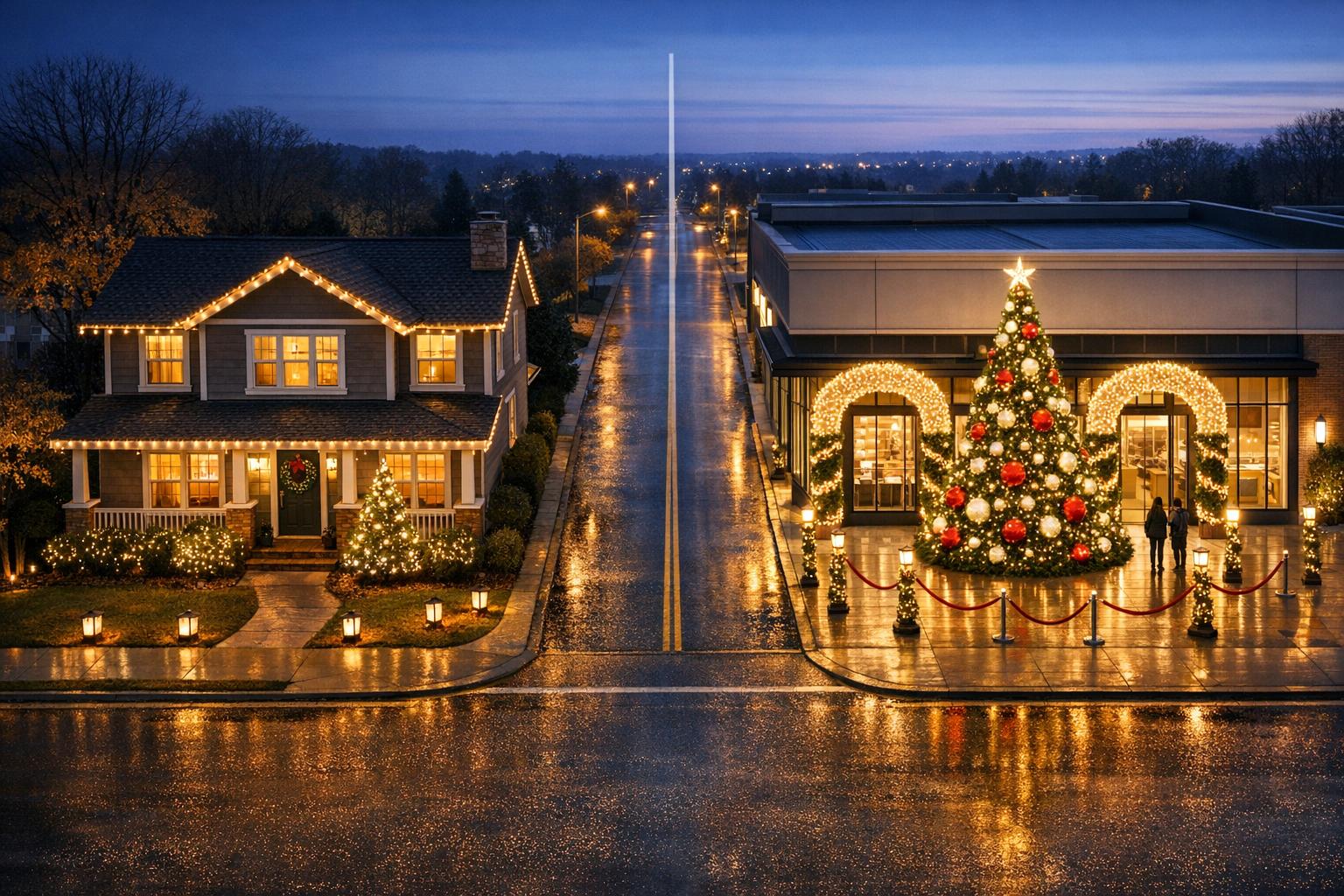
Holiday displays serve different purposes for homes and businesses. Residential setups focus on personal traditions and neighborhood charm, while businesses use displays to attract customers and boost visibility. Key differences include:
| Aspect | Residential Displays | Business Displays |
|---|---|---|
| Purpose | Family traditions, style | Customer attraction, branding |
| Materials | Retail-grade (1-3 years) | Commercial-grade (3-10+ years) |
| Scale | Small, DIY or simple setups | Large, professional installations |
| Budget | $50-$3,500 | $1,500-$150,000+ |
| Audience | Neighbors, community | Customers, visitors |
Understanding these differences helps create displays tailored to their goals, whether spreading holiday cheer at home or driving business success.
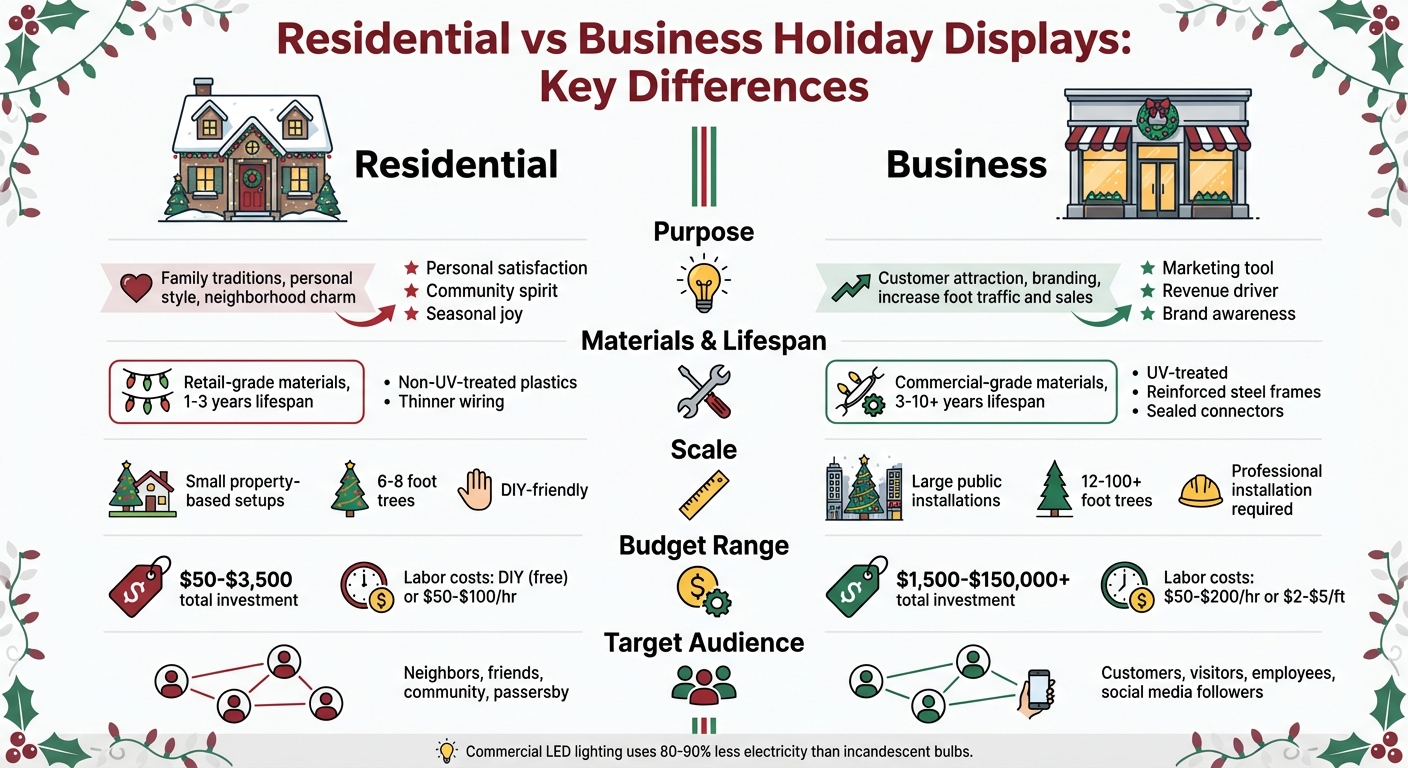
Residential vs Business Holiday Displays Comparison Chart
The main difference between residential and business holiday displays lies in their purpose. Homeowners decorate to celebrate personal traditions and express their style, while businesses use displays as a marketing tool to attract customers and increase revenue. Let’s dive into how these distinct goals influence the design choices for each.
For homeowners, holiday decorations are all about creating cozy family moments, showcasing creativity, and adding to the neighborhood’s festive vibe. The design choices are deeply personal – whether it’s a timeless all-white light display, a playful setup with colorful inflatables, or cherished handmade ornaments passed down through generations. These displays often emphasize specific features of the home, like a beautifully landscaped garden, a welcoming front porch, or unique architectural details. The result is a display that feels personal and authentic, reflecting the family’s personality rather than trying to appeal to a broader audience.
On the other hand, business holiday displays are crafted with a completely different goal in mind – catching attention and driving business. As Holiday Expressions puts it, "Outdoor holiday lighting is not just about appearance. It is about visibility, awareness, foot traffic, and sales". Every design choice, from the size of a holiday tree to the choice of light colors, is made to enhance the customer experience and reinforce the brand’s identity.
These displays act as powerful marketing tools, working every night to draw in potential customers without relying on ads or algorithms. A high-end boutique might opt for understated, elegant lighting to reflect its sophisticated image, while a family-oriented store might go for playful, bold designs to attract shoppers of all ages. Many businesses also integrate interactive features like large ornaments or branded photo stations, encouraging visitors to share their experiences on social media. This not only boosts in-person engagement but also expands the business’s reach online. Ultimately, these displays are designed to align with the brand’s strategy while directly impacting customer behavior – encouraging longer visits and higher spending.
These contrasting objectives shape not only the look but also the scale and investment behind each type of display, which will be explored further in the following sections.
When it comes to holiday displays, the differences between residential and commercial setups go far beyond their intended purposes. The size, complexity, and overall impact of these installations vary widely, shaping everything from the materials used to the methods of installation.
Home holiday displays are typically confined to a single property, focusing on areas like the front porch, roofline, and landscaping. Most residential Christmas trees fall between 6 and 8 feet tall, making them manageable for DIY enthusiasts. These setups are designed to feel personal and cozy, creating a welcoming atmosphere for neighbors and passersby. Homeowners often highlight specific features of their property, such as a well-lit entryway or a beautifully decorated tree in the yard. The goal is to enhance the charm of the home without overpowering the space, keeping the scale intimate and approachable.
Commercial holiday displays operate on an entirely different level. These installations are crafted for large public spaces like shopping centers, city squares, airports, and resorts. Commercial-grade Christmas trees can range from 12 feet to a staggering 100 feet or more, transforming them into iconic attractions. As Darren Vader from The Christmas Light Emporium explains:
"Giant Christmas trees measuring 20-100+ feet serve as destination attractions that draw visitors specifically to experience your holiday display".
To put it into perspective, a 12-foot exterior tree can weigh anywhere from 150 to 500 pounds and is engineered to withstand wind speeds of up to 80 mph. These displays often go beyond just size, incorporating elaborate light shows that cover entire building facades, oversized fiberglass sculptures, and interactive elements like photo stations. Designed to grab attention from afar, they create "skyline signatures" that not only captivate in person but also encourage social media sharing . The sheer scale of these setups significantly impacts both budgeting and installation approaches, topics that will be explored further in the next section.
The price difference between holiday displays for homes and businesses is significant, mainly due to variations in materials, labor, and expected durability. Understanding these factors can help both homeowners and businesses make smarter decisions about their holiday décor spending.
Homeowners generally spend between $50 and $3,500 on holiday displays. DIY setups can cost as little as $50 to $300, while professional installations range from $200 to $3,000 or more. Labor costs for professional help typically fall between $50 and $100 per hour.
Retail-grade decorations, often used in residential settings, have a lifespan of 1 to 3 years. These items are made from materials like non-UV-treated plastics and thinner wiring, which aren’t designed to withstand harsh outdoor conditions. To save money, homeowners can shop post-season sales starting December 26th, where discounts of 50% to 75% are common. Another budget-friendly tip is to use RGB color-changing spotlights instead of wrapping branches with expensive lights. This approach creates striking effects at a fraction of the cost.
In contrast, businesses rely on commercial-grade decorations that prioritize durability and long-term use.
Businesses allocate larger budgets for holiday displays, aiming for greater durability and visual appeal. Small businesses typically spend between $1,500 and $3,500 on standout elements like professional-grade wreaths and trees. Medium-sized spaces often budget $3,500 to $10,000 for comprehensive setups, including custom garlands, facade lighting, and 12- to 15-foot trees. Larger corporate campuses or destination attractions invest $10,000 to $150,000 or more for elaborate features like 20- to 100-foot trees and animated lighting systems.
Commercial-grade materials are built to last. They include UV-treated foliage, reinforced steel frames, and sealed connectors, all designed to withstand heavy public use and extreme weather. As Marlena Guzman, Installation Support Manager at Dekra-Lite, puts it:
"Commercial-grade décor is engineered for public spaces, daily runtime, and constant interaction. Displays use UV-treated foliage, reinforced frames, sealed connectors, and professional-rated LEDs designed for long service life".
With proper care, these materials can last 3 to 10 years or more, making them a cost-effective choice despite their higher upfront costs.
Labor for business installations is more specialized, costing $50 to $200 per hour or $2 to $5 per linear foot. These higher rates reflect the need for skilled expertise, heavy equipment, and adherence to safety standards. To secure better prices and ensure timely installation, businesses should finalize budgets and select vendors by August or September. For those with tighter budgets, focusing on a single high-quality centerpiece can deliver maximum impact without overspending.
| Feature | Residential (Retail-Grade) | Business (Commercial-Grade) |
|---|---|---|
| Typical Budget | $50–$3,500 | $1,500–$150,000+ |
| Material Lifespan | 1–3 years | 3–10+ years |
| Labor Costs | DIY (Free) or $50–$100/hr | $50–$200/hr or $2–$5/ft |
| Durability | Plastic, non-UV-treated | UV-treated, steel core, reinforced |
Energy costs are another key difference. Commercial LED lighting systems use 80% to 90% less electricity than traditional incandescent bulbs. For large displays, this means monthly energy costs of $50 to $200 with LEDs, compared to $400 to $1,000 for incandescent setups. This efficiency makes LEDs an essential choice for businesses running displays for extended hours during the holiday season.
These financial considerations highlight the differing priorities between residential and business holiday displays, from cost and durability to energy efficiency.
Residential and business displays are crafted with different audiences in mind, each with its own set of expectations. These distinctions influence every aspect of their design and purpose, shaping how they are planned and executed.
Home displays are all about entertaining neighbors, friends, and passersby. They’re designed to create cherished community moments and foster a sense of warmth and connection. The ultimate goal? Hearing compliments from neighbors and becoming a must-see stop for families during the holiday season.
These displays emphasize personal expression and family traditions rather than driving specific actions. Homeowners aren’t looking to influence behavior – they’re adding to the neighborhood’s festive vibe and encouraging shared celebration. The payoff is the joy of spreading holiday cheer and being part of a collective seasonal spirit.
For businesses, displays are more than just decorative – they’re strategic tools aimed at grabbing attention and boosting sales. As Holiday Expressions highlights:
"The decision to walk into a business often happens from across the street. Outdoor holiday lighting helps create that first impression".
These displays are designed to stand out, even from a distance, catching the eyes of drivers and pedestrians who might otherwise pass by. Unlike residential setups, business displays aim to do more than invite admiration – they’re crafted to draw people in. Features like interactive photo opportunities encourage visitors to linger, while QR codes link decorations to digital promotions, creating a seamless connection between the physical and digital worlds. In fact, enhanced exterior lighting can increase pedestrian activity in commercial areas by up to 20%, directly influencing foot traffic and sales.
Businesses also have an additional audience to consider: employees. A well-executed display doesn’t just improve the customer experience – it boosts employee morale too. The Christmas Light Emporium explains:
"you’re enhancing the customer experience and boosting employee morale through a well-executed holiday decorating project that directly impacts your bottom line".
When comparing holiday displays for homes and businesses, the differences in style and features highlight their distinct purposes. Residential setups focus on personalization and creativity, while commercial installations are all about visibility and durability.
Home displays often aim for a "Clean, Simple, and Classy" look, accentuating a house’s architecture with custom lighting. Many homeowners add a personal touch by including handmade elements – like alternating color patterns for a Candy Cane theme or nostalgic designs inspired by "Charlie Brown" traditions.
A popular technique for homes is the "ground game", where net lights are draped over landscape beds and glimmer sprays are placed in trees or pots to mimic snowfall. These setups typically use retail-grade materials, which feature thinner wiring and unsealed connectors. While these materials are affordable and work well for private use, they are designed to last only 1 to 3 years. This is sufficient for residential displays, where decorations face less wear and tear and have shorter daily runtimes.
Commercial holiday displays work on a much larger scale. Businesses often feature giant centerpieces, such as artificial trees that can range from 12 to over 100 feet tall. These trees are built with modular steel frames to withstand harsh weather. As Marlena Guzman, Installation Support Manager at Dekra-Lite, notes:
"Commercial-grade décor is engineered for public spaces, daily runtime, and constant interaction".
Other common elements include three-dimensional wireframe sculptures and fiberglass characters like Santa, snowmen, and reindeer. These pieces are designed for interactive photo opportunities, helping businesses connect with customers and promote their brand. Large LED snowflakes and stars create striking "skyline signatures" visible from afar, while UV-treated wreaths – some as large as 12 feet in diameter – maintain their appearance even in tough weather conditions.
To meet the demands of public spaces, commercial displays use UV-treated, flame-retardant materials reinforced with steel cores. These materials ensure durability and can last 3 to 10 years. By combining longevity with bold visuals, these displays not only attract attention but also align with the business goal of engaging customers and boosting brand recognition.
For a polished look at home, focus lighting on key areas like your front doorway or roof peaks. This approach creates a stylish effect without needing to decorate every window or surface. A couple of RGB color-changing spotlights can also work wonders, casting a vibrant wash of color on trees or walls. This is a much simpler and more affordable alternative to covering everything with strings of mini lights.
Switching to LED lights can make a big difference in energy use. LED mini-lights consume just 5–7 watts per 100-light string, compared to 40 watts for traditional incandescent bulbs. Over a 45-day display, this can cut costs from about $15–$20 down to just $2–$3. To make things even easier, use Wi-Fi-enabled smart plugs or mechanical timers to control when your lights turn on and off. This not only saves energy but also helps extend the life of your bulbs.
When it comes to installation, avoid damaging your home by using plastic gutter or shingle clips instead of staples. For powering lights on distant trees or gates, portable power stations are a safer and more practical choice than running long extension cords. Want to share your festive setup with others? Add your home display to Christmas Light Guide to connect with the community and inspire visitors.
Businesses have different goals when it comes to holiday displays. While homeowners focus on personal touches, businesses need to prioritize customer engagement and professionalism. Using UV-treated, flame-retardant, heavy-duty commercial-grade materials ensures a polished and safe display. Start planning early – August or September is ideal – to secure professional installers and avoid product shortages before the holiday rush. Darren Vader from The Christmas Light Emporium sums it up well:
"Christmas decorations for a business are more than just seasonal displays – they’re powerful tools for creating memorable customer experiences and spreading holiday joy".
To create buzz, design "Instagrammable" moments. Think oversized wireframe displays, fiberglass characters, or branded photo frames with QR codes to encourage visitors to share their experience online. Instead of scattering many small decorations, focus on one standout feature, like a large statement tree or a lighted arch. This helps establish your display as a destination. Stick to a cohesive color palette of 2–3 colors that reflect your brand for a unified look.
Finally, streamline operations with professional lighting controllers and commercial timers. These tools ensure your display runs smoothly while cutting down on daily management time. Don’t forget to showcase your business display on Christmas Light Guide to draw in more visitors and enhance your brand’s visibility.
Residential displays bring a personal touch to spaces, showcasing individual style and spreading joy. On the other hand, business displays are all about drawing in customers and building a brand’s presence. This difference in purpose naturally leads to distinct design strategies. As Marlena Guzman, Installation Support Manager at Dekra-Lite, explains:
"Commercial vs. retail is ultimately about risk, runtime, and return."
While residential displays tend to be smaller and more budget-friendly, commercial setups often go big with bold, eye-catching features designed to grab attention. Homeowners typically lean toward affordable, DIY options, while businesses prioritize durable, professional-grade installations.
The audience plays a key role in shaping these choices. For homes, the goal is to charm family and neighbors with personal flair. For businesses, the focus shifts to creating striking visuals that encourage social sharing and keep people engaged.
Whether you’re decorating your home or a storefront, it’s essential to tailor your display to your goals and audience. By choosing the right materials, scale, and features, you can create a display that leaves a lasting impression.
When deciding, consider durability, safety, cost, and intended use. Retail-grade décor is budget-friendly and suitable for smaller, low-traffic areas, but it may not hold up over time. On the other hand, commercial-grade décor is designed for high-traffic spaces, built to withstand weather, and made for long-term use. While it comes with a higher initial cost, its longevity makes it a smart choice for professional or large-scale displays, especially in business environments.
Businesses should start preparing their holiday displays two to three months in advance. This timeline ensures there’s enough time to coordinate with vendors, book venues, and gather materials. Planning ahead helps guarantee that everything is in place for a display that stands out.
Business displays become much more shareable when they deliver a visually striking and immersive experience. Elements like bold, attention-grabbing entrances, vibrant and dynamic lighting, and interactive features invite visitors to snap photos and share them on social media. Using durable, high-quality decorations ensures the display maintains its charm throughout the season, keeping it Instagram-worthy for longer. Prioritizing designs that are both memorable and visually appealing naturally encourages online sharing, helping the display reach a broader audience.