
QR codes are transforming how we experience Christmas light displays. They make navigation easier, reduce the need for excessive signage, and provide real-time updates and valuable insights for organizers. Here’s a quick breakdown of what QR codes bring to the table:
Whether you’re organizing or visiting, QR codes make holiday light displays more accessible, engaging, and efficient.
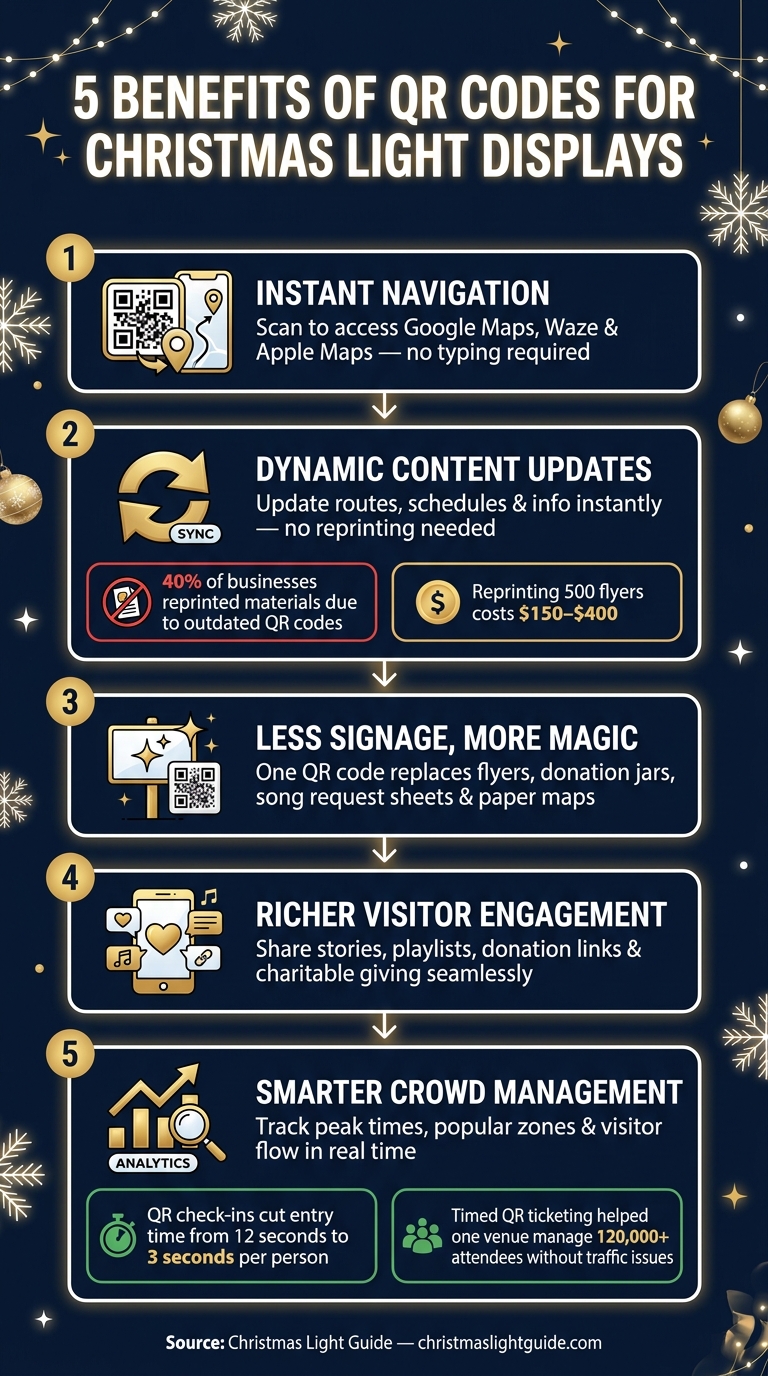
5 Benefits of QR Codes for Christmas Light Displays
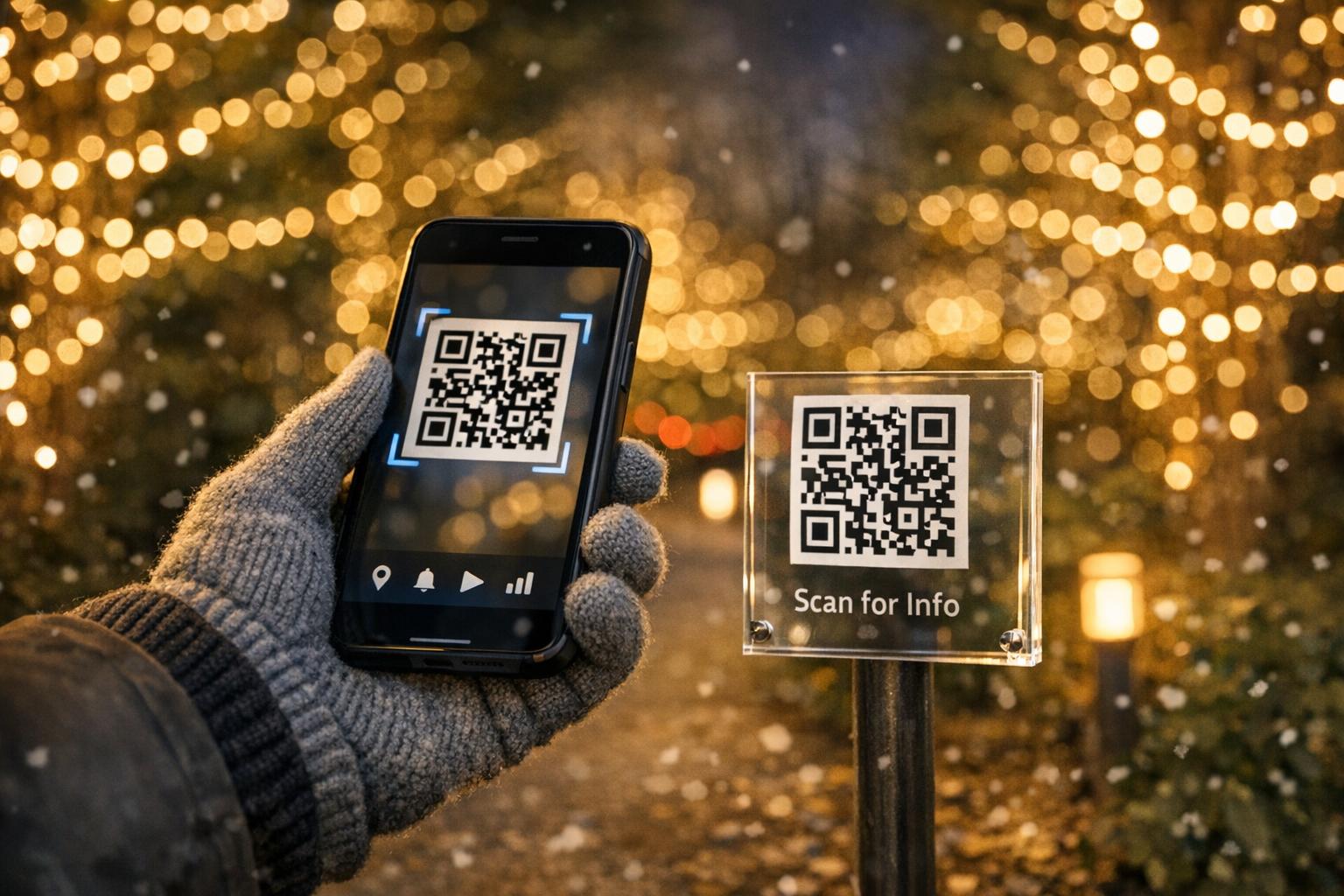
Navigating a sprawling Christmas light display at night – while juggling kids, cold weather, and crowds – can be a real challenge. Traditional signs often go unnoticed, and manually entering addresses into a GPS? That’s not only inconvenient but also potentially unsafe. This is where a QR code at the entrance can make all the difference.
By scanning the code, visitors gain instant access to navigation links that work seamlessly with Google Maps, Waze, and Apple Maps – no typing required. Christmas Light Guide simplifies this process by including direct navigation links on each display listing. Pairing an on-site QR code with a verified listing ensures visitors get precise directions from the moment they arrive. This is especially useful for larger venues where every second saved counts.
Take Suwannee Lights, for example. Spanning hundreds of acres and showcasing over 15 million lights, they’ve taken navigation to the next level with a real-time interactive map. This map doesn’t just show the trail – it pinpoints your exact location as you move through the display. Here’s how they describe it:
"A real-time interactive map to guide you through the magic – featuring a real-time interactive map that shows your exact location on the light trail as you walk or drive through. Easily see where you are in relation to each landmark, photo spot, featured display, and iconic part of the park." – Suwannee Lights
Dynamic QR codes add another layer of convenience. These codes can be updated instantly, meaning if a display area closes temporarily or a route changes mid-season, the destination URL can be adjusted on the fly. No need for additional signs or confusion – visitors are redirected in real time, ensuring a smooth experience even during unexpected changes. This flexibility is a game-changer for managing seasonal events with ease.
Printed maps often fall short when it comes to adapting to real-time changes during multi-stop Christmas light tours. A single QR code can solve this problem by offering digital, turn-by-turn navigation for every stop, eliminating the need for static maps.
Here’s how it works: organizers can take a pre-planned multi-stop route from Google Maps and convert it into a QR code. Visitors simply scan the code, and they’re instantly guided through the tour with step-by-step directions in their favorite map app. Considering that only 2.47% of visitors download dedicated tour apps, this browser-based QR approach makes navigation accessible to a much broader audience. This simple yet powerful method lays the groundwork for a wide variety of tour options.
For example, a single QR code can direct users to a landing page offering themed tour choices, like a family-friendly driving route or a walkable "best-in-show" path. Tools like Proxi allow organizers to draw custom walking or driving paths directly onto a digital map, providing visitors with a clear visual guide instead of just a list of locations. A great example of this approach was seen in December 2025 in Greater Victoria, where locals contributed their favorite displays to a community-driven Proxi map. Visitors could access this ever-evolving tour with just one scan.
Dynamic QR codes take this convenience a step further. These codes can be placed on flyers, yard signs, or entrance banners, and their destination URLs can be updated instantly. If a display is removed or a road is unexpectedly closed, organizers can make real-time updates without reprinting materials.
"Dynamic QR codes let teams change the link behind the code at any time… Teams can swap a map link, update a landing page, revise parking notes, or route visitors around a temporary closure without the cost of tossing printed materials." – QR Code Generator
For displays listed on Christmas Light Guide, navigation links to Google Maps, Waze, and Apple Maps ensure visitors always have reliable directions. Pairing a verified listing with an on-site QR code guarantees that visitors start their tour with accurate and up-to-date guidance.
A single QR code can replace an overwhelming collection of signs. Instead of filling a display with excessive signage, organizers can use one scannable link to provide detailed information – keeping the display visually clean while giving visitors all the details they need.
This approach not only maintains the aesthetic appeal of the display but also ensures visitors have easy access to relevant information. For example, during the December 2025 Holiday Light Experience in Oceanside, NY, illusionist Eric Wilzig used a QR code to share insights into his 10-month planning process, showcase 100 custom 3D-printed Mickey Mouse figures, and even provide a direct donation link for Blood Cancer United. Conveying such depth through traditional signage would create unnecessary clutter.
"The lights do something to the music – they form images in the tree and then quickly move to the window. That’s the whole aspect that makes this hobby a million hours longer than just plugging in lights." – Eric Wilzig, Illusionist and Display Creator
QR codes also simplify charitable giving. Gary Mayfield, who created the Holiday Light Show on Edison Road in South Bend, IN, integrated a QR code during the 2025 season to collect donations for the St. Vincent De Paul Society‘s Food Pantry. The code also linked to an Amazon wish list, eliminating the need for bulky donation boxes.
Beyond donations, QR codes can share logistical information like accessibility-friendly tour schedules, low-sensory night options, or character appearance times. Displays listed on Christmas Light Guide can pair a verified listing – complete with location details and navigation links – with an on-site QR code. This combination gives visitors a reliable source of information both before and during their visit, enriching their overall experience while keeping things simple and organized.
QR codes aren’t just great for navigation – they’re also a powerful tool for keeping content fresh during the holiday season. One of their standout features is the ability to update the linked content without having to change the physical QR code itself. This is made possible through dynamic QR codes, which use a short redirect URL instead of embedding a fixed destination. The QR code you print stays the same, but you can update what it points to anytime through a management dashboard. This means visitors always see the latest information.
"The visual part of your QR code – the black and white square pattern – never changes. All the magic happens digitally by re-routing the short link associated with your code." – OpenQR
This adaptability also saves money. A 2025 survey found that over 40% of businesses had to reprint materials because of outdated or broken QR codes. Reprinting 500 flyers can cost anywhere from $150 to $400 – a completely avoidable expense with dynamic QR codes.
For example, a holiday light display organizer could use the same QR code to serve multiple purposes throughout the season. In November, it might link to a "coming soon" teaser page. By December, it could provide a live schedule and route map. Then, in January, it could point visitors to a feedback form or a save-the-date page for the next year. If there are weather delays, updated showtimes, parking changes, or new donation links, these adjustments can be made instantly. Plus, scan counts and engagement data remain uninterrupted.
Every time someone scans a QR code, it collects essential data like the timestamp, location, and device type. This information paints a clear picture of visitor movement and highlights congestion points.
Beyond just helping with accurate navigation and up-to-date content, QR codes provide real-time insights into visitor behavior. Instead of guessing based on visual observations, organizers can use live dashboards to track peak arrival times and spot queues forming in real-time. As OpenQr explains:
"Watch check-in flow live as attendees arrive – see peak entry windows and identify queue build-ups as they happen."
This level of visibility allows organizers to act quickly – redirecting staff or adjusting traffic flow to prevent bottlenecks from escalating. For example, QR code check-ins have drastically reduced entry times, cutting them down from 12 seconds to just 3 seconds per person.
By assigning unique QR codes to different zones or displays, organizers can also identify which areas draw the most attention. These insights go a long way in improving operational efficiency and planning for future events.
Take the example of Bayside Adventure in Granite Bay, CA. In December 2024, they managed their Christmas Lights Drive-Through using timed ticketing, releasing 200 tickets every 30 minutes. This system allowed them to handle over 120,000 attendees without any major traffic issues. As TicketSpice highlighted in their case study:
"By controlling the flow of tickets, they also controlled the flow of cars and effectively eliminated the traffic nightmares of previous years."
QR scan data also reveals where visitors are coming from, giving organizers the tools to create more tailored marketing campaigns and plan better for future events. These insights not only streamline operations but also enhance the overall visitor experience.
QR codes have become one of the most effective tools for enhancing Christmas light displays. They simplify tasks like providing real-time updates, reducing physical clutter, and offering organizers insights into crowd behavior. With just one QR code, you can replace piles of flyers, donation jars, song request sheets, and paper maps. For instance, the Salvation Army’s "Tree of Lights" in St. Paul uses QR codes to let visitors make charitable donations instantly. Similarly, residential displays like the one at N9599 Clover Ridge Tr. allow guests to vote for the next song from a playlist of 24 to 34 tracks. These aren’t just novelties – they make the experience smoother and more engaging.
On the organizer’s side, QR codes offer powerful tools for planning and managing events. Data collected from QR scans reveals patterns like peak crowd times, popular zones, and how visitors move through the display. This information makes it easier to plan and improve future events.
If you’re searching for displays that already use these features, Christmas Light Guide is a helpful resource. It lists verified displays – residential, business, non-profit, and more – across the country. Each listing includes direct links to Google Maps, Waze, and Apple Maps, making it simple to navigate to your chosen stops. Plus, the site allows anyone to add a display for free.
Whether you’re visiting or organizing, QR codes make every step of the holiday light display experience smoother and more enjoyable.
Dynamic QR codes offer a smarter choice for holiday light displays. Unlike static QR codes, they allow updates to the linked content without needing to reprint signs, saving both time and resources. Plus, they provide valuable scan analytics, such as the date and location of scans, giving you insights into visitor engagement. With dynamic codes, you can tweak links throughout the season to share fresh or seasonal updates, making your display more adaptable and enhancing the overall experience for visitors.
QR codes can connect your audience to digital experiences that make their visit more engaging. For example, you could link to a page for voting on songs during a musical show, a donation platform, or even controls for an interactive display. Another idea is to direct visitors to your website or a listing on Christmas Light Guide, where they can find details like schedules or navigation tips. These links not only enhance the experience but also keep your audience informed and connected while they enjoy your display.
To make scanning reliable at night, opt for a high-contrast design with dark modules on a light background, and steer clear of inverted colors. Boost the code’s size by 50–100% to improve visibility, and choose a matte finish to reduce glare. Ensure there’s a clear quiet zone around the code, at least four modules wide. In areas with no lighting, consider adding backlighting, using reflective materials, or directing external light onto the code.