
Holiday lights can make your home festive, but safety is key. Here’s what you need to know:
Safety planning ensures a hassle-free, festive holiday season.

LED vs Incandescent Holiday Lights: Safety, Cost & Performance
When it comes to setting up an Christmas light display, planning is everything. Taking the time to check your home’s power capacity, sketch out a layout, and choose the right products can save you from headaches like tripped breakers, damaged gutters, or even fire hazards. Here’s how to tackle each step.
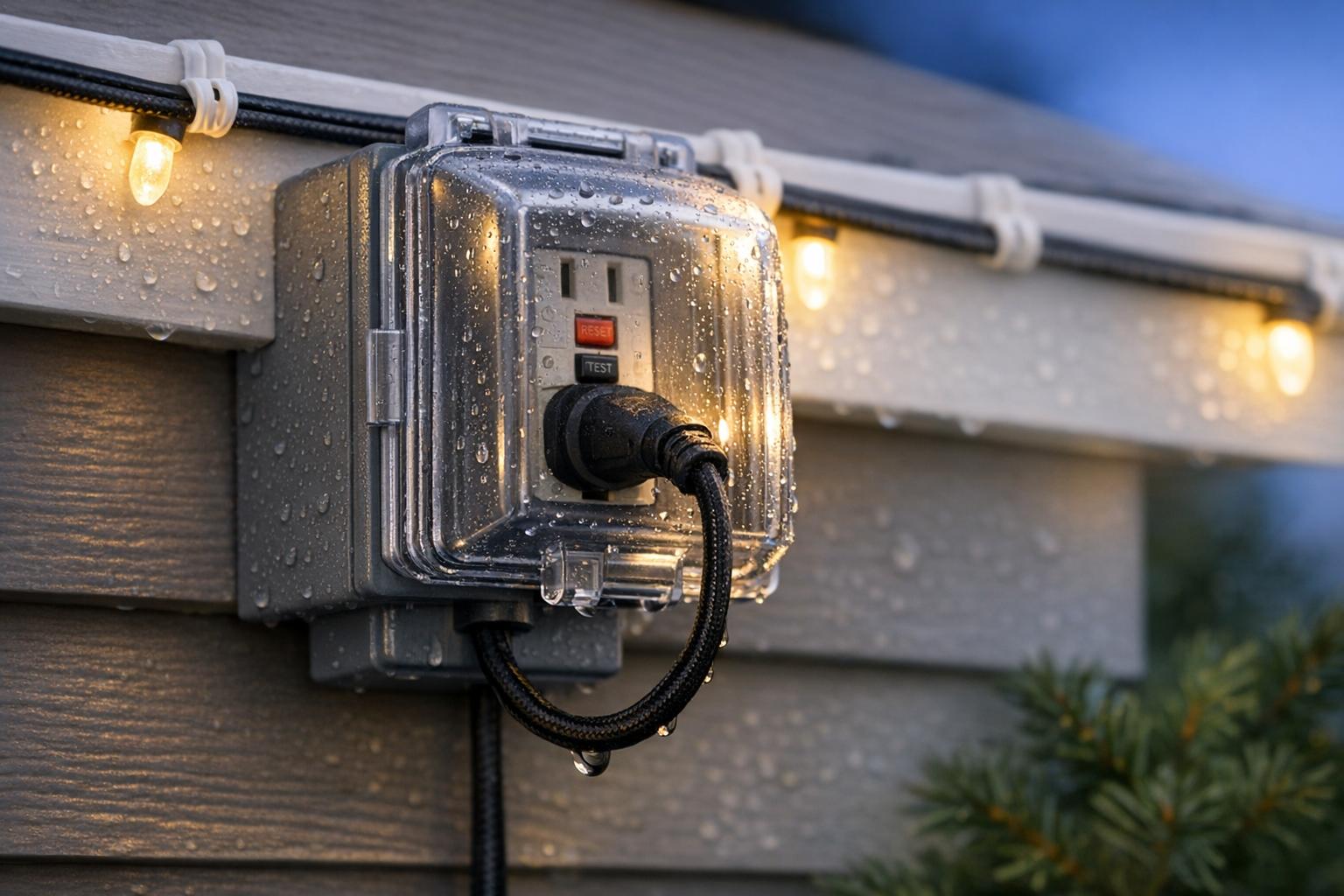
Start by locating your outdoor outlets and confirming they use Ground Fault Circuit Interrupters (GFCIs). These devices are essential because they cut power immediately if moisture causes an electrical leak. They’re required by code for outdoor outlets, so if your GFCI trips repeatedly after your display is up, it could mean moisture has entered a connection or you’ve overloaded the circuit.
Most residential circuits are designed for 15 to 20 amps, which means they can handle about 1,500 to 1,800 watts of continuous load. However, to stay safe, aim to use no more than 80% of that capacity – approximately 1,200 watts per circuit. Calculate the total wattage of your lights and decorations, and make sure it stays under this limit.
Once you’ve figured out the wattage, plan your layout to distribute the load evenly across your available circuits.
Before you start hanging lights or setting up decorations, draw out your display. Assign specific outlets to different sections of your setup. This "power zoning" approach ensures that no single circuit carries too much load. For example, you might connect roofline lights to one outlet, yard decorations to another, and tree lights to a third.
"Plugging one extension cord into another to reach a distant outlet creates compounding resistance at every connection point. Each junction generates heat." – Josh Bell, Marketing, The Christmas Light Emporium
To avoid this issue, always use a single extension cord of the correct length instead of daisy-chaining multiple cords. If your run is less than 50 feet, a 14-gauge outdoor-rated cord will do the job. For distances between 50 and 100 feet, upgrade to a 12-gauge cord to prevent voltage drop, which can cause lights to dim at the far end. Plan your cord routes carefully to avoid puddles, foot traffic areas, and flammable materials like dry leaves or mulch.
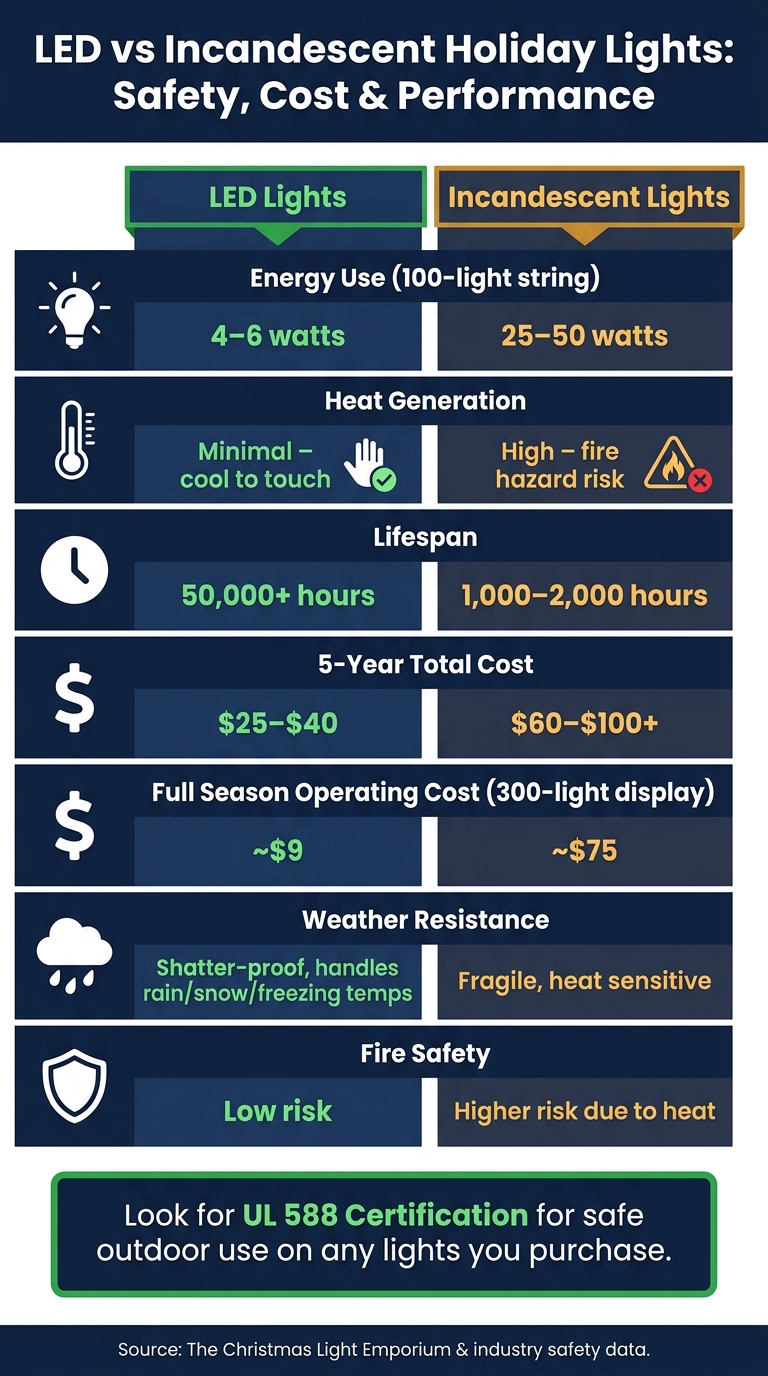
LED lights are the better choice for outdoor displays. Unlike incandescent lights, LEDs stay cool to the touch, reducing fire risk. They’re also shatter-proof and built to handle rain, snow, and freezing temperatures. Here’s a quick comparison between LED and incandescent lights:
| Feature | LED Lights | Incandescent Lights |
|---|---|---|
| Energy use (100-light string) | 4–6 watts | 25–50 watts |
| Heat generation | Minimal (cool to touch) | High (fire hazard risk) |
| Lifespan | 50,000+ hours | 1,000–2,000 hours |
| 5-year total cost | $25–$40 | $60–$100+ |
Running a 300-light LED display for a season costs about $9, compared to $75 for incandescent lights.
When shopping for lights, look for the UL 588 certification, which means the product has been tested for safe seasonal outdoor use. For extension cords and accessories, make sure they are "outdoor-rated." Adding weatherproof plug gaskets (around $10 for a pack) is a smart move – they keep moisture out of your connections and help prevent GFCI trips during the season.
When setting up outdoor lights and cords, make sure they are specifically rated for outdoor use. Indoor products are not designed to withstand rain, snow, or temperature fluctuations, making them a fire and shock hazard if used outside. Using the right products from the start can help you avoid electrical issues down the road.
Check for an IP (Ingress Protection) rating on your lights and fixtures. For example, an IP67 rating means the product is completely dustproof and can handle brief submersion in water, making it a reliable choice for displays exposed to rain or snow.
Another key detail is the maximum string connection limit, which is typically printed on the product label. For incandescent lights, manufacturers often recommend connecting no more than 3–5 strings end-to-end. LED strings, being more energy-efficient, often allow for more connections, but you should always stick to the specific limit stated by the manufacturer. Ignoring these limits can lead to overheating or blown fuses.
Once you’ve confirmed the proper ratings, the next step is managing the electrical load to avoid overloads and short circuits.
Electrical failures are responsible for about 770 home structure fires during the holiday season each year. Many of these incidents can be avoided by adopting a few simple safety practices.
Follow the 80% rule: for a 15-amp circuit, limit the load to 1,200 watts. This means you should never exceed 80% of your circuit’s capacity. Before plugging in your decorations, calculate the total wattage. If you’re close to the limit, distribute the load across another circuit instead of taking risks.
Always use GFCI-protected outlets for outdoor lights. These outlets are designed to detect current leaks – like those caused by moisture – and will shut off power in milliseconds to prevent shocks or fires. If your GFCI trips repeatedly, it could mean moisture has entered a connection or the circuit is overloaded. Don’t just reset it and ignore the warning; investigate and address the root cause.
After managing your electrical load, focus on protecting your setup from moisture-related problems.
Moisture is a leading cause of GFCI trips and damaged connections. A simple way to prevent water from reaching your plugs is to create a drip loop. Let your extension cord hang in a U-shape below the outlet or connection point so water drips off the bottom instead of flowing into the plug.
For ground-level connections or areas prone to puddles, use weatherproof snap-together boxes to fully enclose the plugs. If you’re working with C7 or C9 bulb strings, consider adding rubber O-ring socket seals to create a watertight barrier between each bulb and its socket. These are inexpensive and effective. For any remaining exposed plug junctions, wrap them securely with 3–4 overlapping layers of electrical tape to keep rain out.
In severe weather conditions like heavy rain, ice storms, or strong winds, the safest option is to unplug your display entirely. While timers and surge protectors offer some protection, nothing beats disconnecting the power when the weather turns dangerous.
Falls are a major risk when it comes to holiday decorating – 40% of injuries in 2022 were tied to ladder falls. Safety consultant Rob Eckwall puts it plainly:
"Ladder-related decorating injuries are the #1 holiday decorating hazard."
To stay safe, always maintain three points of contact with the ladder – either two hands and one foot or two feet and one hand. Never stretch or lean beyond arm’s length. If you can’t reach a spot, climb down and reposition the ladder instead of risking a fall. For added stability, use a ladder stabilizer when working on uneven ground or near gutters, and ask someone to hold the base steady.
When attaching lights, avoid staple guns or nails, as they can damage the wire insulation and create fire or shock hazards. Instead, opt for plastic clips specifically designed for holiday lights. On metal surfaces, magnetic clips can save time and reduce the need to reposition the ladder frequently.
These precautions are key to ensuring your ladder work is both safe and effective.
When decorating trees, a spiral wrap starting at the trunk and working upward creates a clean, wind-resistant look. Use 5mm LED strings for their durability and even lighting. For bushes and hedges, net lights are a simple solution – just drape them over the top and secure the edges to prevent movement in strong winds.
Keep cords off the ground whenever possible. For pathway lighting, use lawn speed stakes to keep fixtures upright and away from puddles or snow. Avoid running cords across walkways where they could become a tripping hazard. LEDs are an ideal choice for outdoor decorations since they stay cool to the touch. This eliminates the risk of heat buildup near dry leaves, branches, or fabric decorations.
"The wrong clip means sagging lights, stripped gutters, or a windy-night disaster." – The Christmas Light Emporium
By using the right tools and techniques, you can create a safe and polished holiday display.
Proper equipment and secure setups are just the start – your personal safety is just as important. Andrew Caryl from The Christmas Light Emporium offers this advice:
"Mid-to-late October gives you mild weather and daylight for safe installation. Planning ahead means no rush, no cold fingers, and no shortcuts."
Installing lights in October provides better conditions – longer daylight hours, mild temperatures, and less pressure to finish quickly. Avoid working in wet, icy, or windy weather; a ladder on frozen ground is a recipe for disaster. Wear non-slip shoes for added stability, and inspect each strand for damage before climbing.
Before heading up the ladder, plan your plug locations and string connections. This way, you can minimize adjustments at height, reducing your time spent in potentially risky positions.
Running your holiday light display smoothly is just as important as setting it up. One way to simplify this is by using a 15-amp outdoor timer or a photocell sensor. These devices automate the on/off cycles for your lights, so you don’t have to brave the cold to unplug them manually.
"A 15-amp outdoor timer means your lights turn on at dusk and off at midnight – no forgetting, no wasted electricity, no trudging outside in your slippers." – The Christmas Light Emporium
Automation doesn’t just save you effort – it also helps extend the life of your lights and cuts down on energy costs. For example, running a 300-light LED display for 60 days costs about $9, compared to $75 for incandescent lights. To keep everything in top shape, regularly inspect weatherproof gaskets to ensure moisture isn’t sneaking into your connections.
When the season wraps up, it’s time to shift focus to carefully removing and storing your lights for next year.
Taking down your lights is just as delicate a process as putting them up. Choose a day when temperatures are above freezing, and ensure surfaces are dry. If clips are frozen to gutters or shingles, don’t yank them off – let them thaw or ease them off gently to avoid causing damage.
Always unplug your lights before starting the removal process. Work in small sections to avoid straining wires or risking your balance on a ladder. Once the lights are down, bring them indoors and allow them to dry completely before packing them away.
"Moisture is the enemy of reusable lights. Let strands dry fully indoors before storing them to prevent corrosion or mold." – Dazuma
To keep your lights organized and tangle-free, use storage reels or carefully wrap each strand. Tangled wires can lead to internal breakage, which often goes unnoticed until the next season.
Before packing everything away, take a few minutes to inspect your lights for any issues.
After taking down your lights, give them a thorough inspection. Look for cracked insulation, broken bulbs, or loose connections along each strand.
"If cords are brittle, cracked, or unreliable, replacement is safer than reuse." – Dazuma
LED lights tend to last much longer – up to 50,000 hours compared to the 1,000–2,000 hours typical of incandescent bulbs. If an LED strand fails after just a few seasons, it’s likely due to a wiring problem. If a section of lights goes out, check for a loose bulb in that area first. Many LED strings are designed so that one faulty bulb can take out an entire segment. Don’t store strands with unresolved issues – replace them now to save yourself a headache next year.
Once your display is set up and running without a hitch, sharing it with your neighborhood can be one of the most fulfilling parts of the process. Every year, millions of people visit holiday displays, and listing yours is a great way to connect with your local community. To keep things festive and safe while welcoming visitors, follow these final tips.
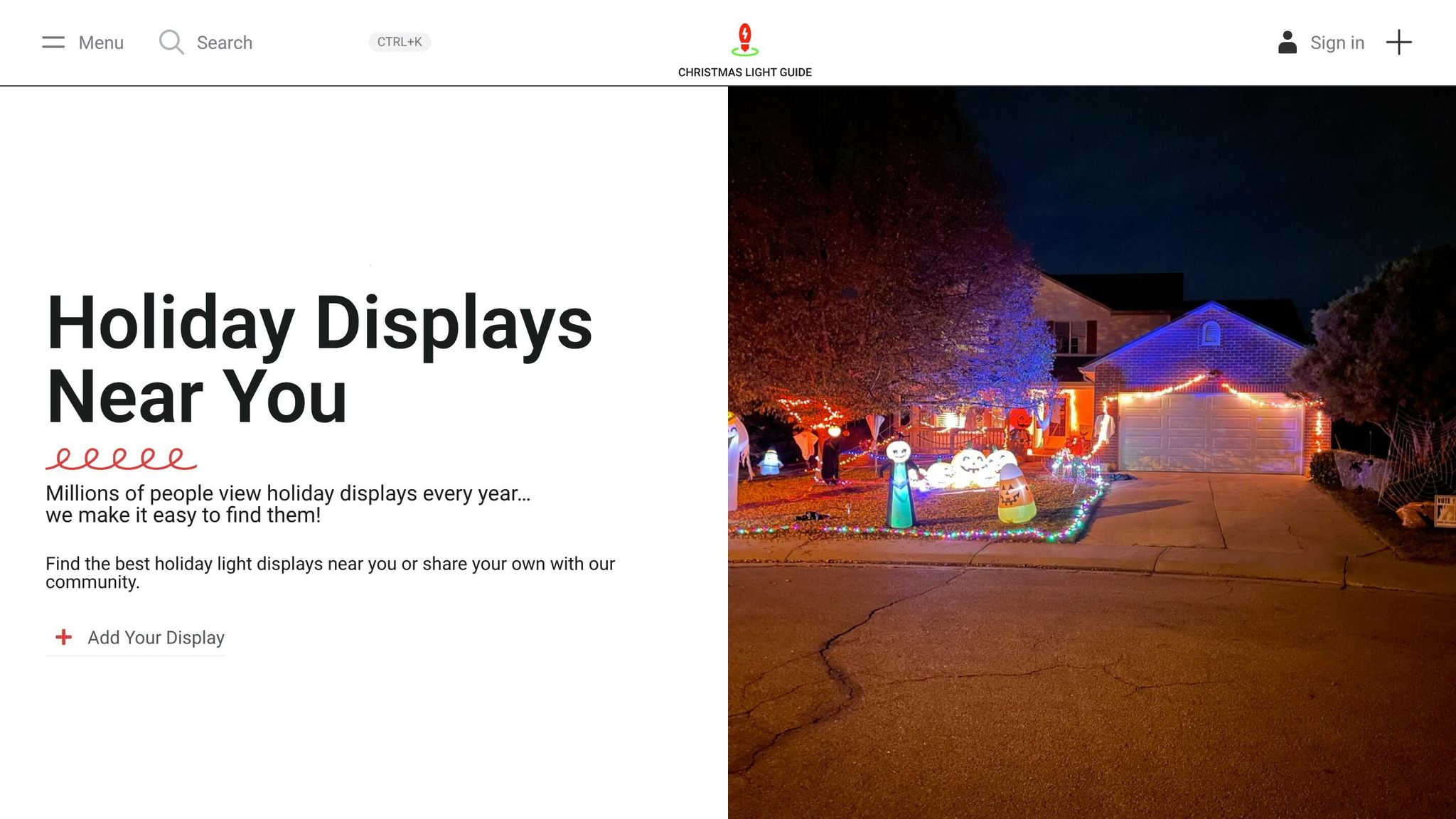
When your display is ready, Christmas Light Guide makes it easy to share it with others. Just click "Add Your Display" and choose the category that fits best – whether it’s Residential, Business, Church, Public Park, Non-Profit, Zoo, or Farm/Agricultural. Once your listing goes live, it will include direct navigation links for Google Maps, Waze, and Apple Maps, making it simple for visitors to find you.
For even more exposure, you might want to opt for a Verified listing, which confirms your display is active and accurately described. Christmas Light Guide aims to feature 1 million homes in a single holiday season, and adding your display – no matter its size – is a wonderful way to contribute to this shared celebration.
"Just as the first Christmas brought a message of hope and unity, let’s rekindle that spirit today. Believe in the magic of human connection, and let’s build a world where faith and trust are the greatest gifts." – Christmas Light Guide
With your display listed and visitors on their way, it’s essential to prioritize safety. Start by managing cords and pathways effectively. Keep extension cords off walkways by moving them to the edges, running them through mulch beds, or covering them with temporary mats. Ensure that all outdoor outlets and connections meet the safety recommendations mentioned earlier in this guide.
If you expect a lot of visitors, plan for traffic flow by designating parking areas and creating clear walkways. While commercial displays may draw between 10,000 and 15,000 vehicles in a single season, even residential displays can get busy. Well-lit paths and setting a reasonable cutoff time can help keep things safe and manageable. Also, consider using LED lights throughout your display – they stay cool to the touch, reducing the risk of burns if someone accidentally comes into contact with a strand, unlike traditional incandescent bulbs.
Creating a safe holiday display starts with making thoughtful decisions from the get-go. Picking the right products, understanding your circuit capacity, using clips designed for the job, and shielding outdoor connections can make all the difference between a smooth holiday season and constant electrical hiccups. These precautions tie directly back to the essential planning and installation tips we’ve already covered.
The type of lighting you choose also impacts safety and efficiency. LED lights stand out for their energy savings and durability, making them ideal for outdoor displays.
Keep these practical tips in mind as you prepare:
"Planning ahead means no rush, no cold fingers, and no shortcuts." – The Christmas Light Emporium
To determine if your circuit can safely support your holiday lights, start by identifying its capacity – typically 15 or 20 amps. Then, add up the wattage of all the lights and devices connected to that circuit.
Here’s a quick rule of thumb for a 15-amp circuit: Keep the total load under 1,152 watts, which is 80% of the circuit’s capacity. This safety buffer helps prevent overloads.
To calculate the amperage load, divide the total wattage by 120 volts (the standard voltage in the U.S.). Make sure this number stays below 80% of the circuit’s capacity to avoid electrical hazards.
If your outdoor GFCI outlet keeps tripping, start by unplugging all connected lights and resetting the outlet. Carefully inspect your lights, cords, and connections for any signs of damage or moisture, as these are common culprits for triggering trips. If moisture is present, dry the outlet thoroughly. Make sure the circuit isn’t overloaded, and consider using protective covers to shield the outlet from the elements. If the problem continues, it’s best to call a qualified electrician to inspect or replace the GFCI outlet.
To keep outdoor plug connections dry, start by creating a drip loop – this simple technique directs water away from the connection point. For added protection, use tools like weatherproof covers, electrical tape, or weatherproof cord boxes. If you’re working with C7 or C9 cordsets, the rubber O-rings can help form a watertight seal. Whenever possible, position the connections under covered areas to shield them from rain. You might also want to look into all-weather plug gaskets, which can help prevent moisture buildup and avoid GFCI trips.